

Vein treatment in Addison: understanding your options for varicose and spider veins
If you have been putting off vein treatment because you imagined weeks of recovery or hospital stays, the reality might surprise you. Modern vein procedures have moved far beyond surgical stripping. Today, most treatments happen in a comfortable vein center, take 30 minutes or less, and involve walking out the same day.
At the Addison vein clinic on Dallas Parkway, treatments such as radiofrequency ablation and sclerotherapy address both the visible veins and the underlying circulatory problems.
Understanding what each treatment does and when it applies can help you have a more productive conversation with a vein doctor. Not every patient needs the same approach.
Why treatment matters beyond appearance?
Varicose veins and spider veins may often be dismissed as cosmetic issues, but the symptoms that accompany them are not. Leg heaviness that builds through the day, ankle swelling that leaves sock marks, nighttime cramps that wake you up, and aching that makes it hard to stand through a workday all affect quality of life.
These symptoms typically trace back to chronic venous insufficiency, a condition in which vein valves stop working properly, allowing blood to flow backward and pool in the legs.
Left untreated, the pooling tends to worsen. Skin changes may develop near the ankles, and in more advanced cases, venous ulcers may form. Treatment addresses the root cause rather than just covering up symptoms.
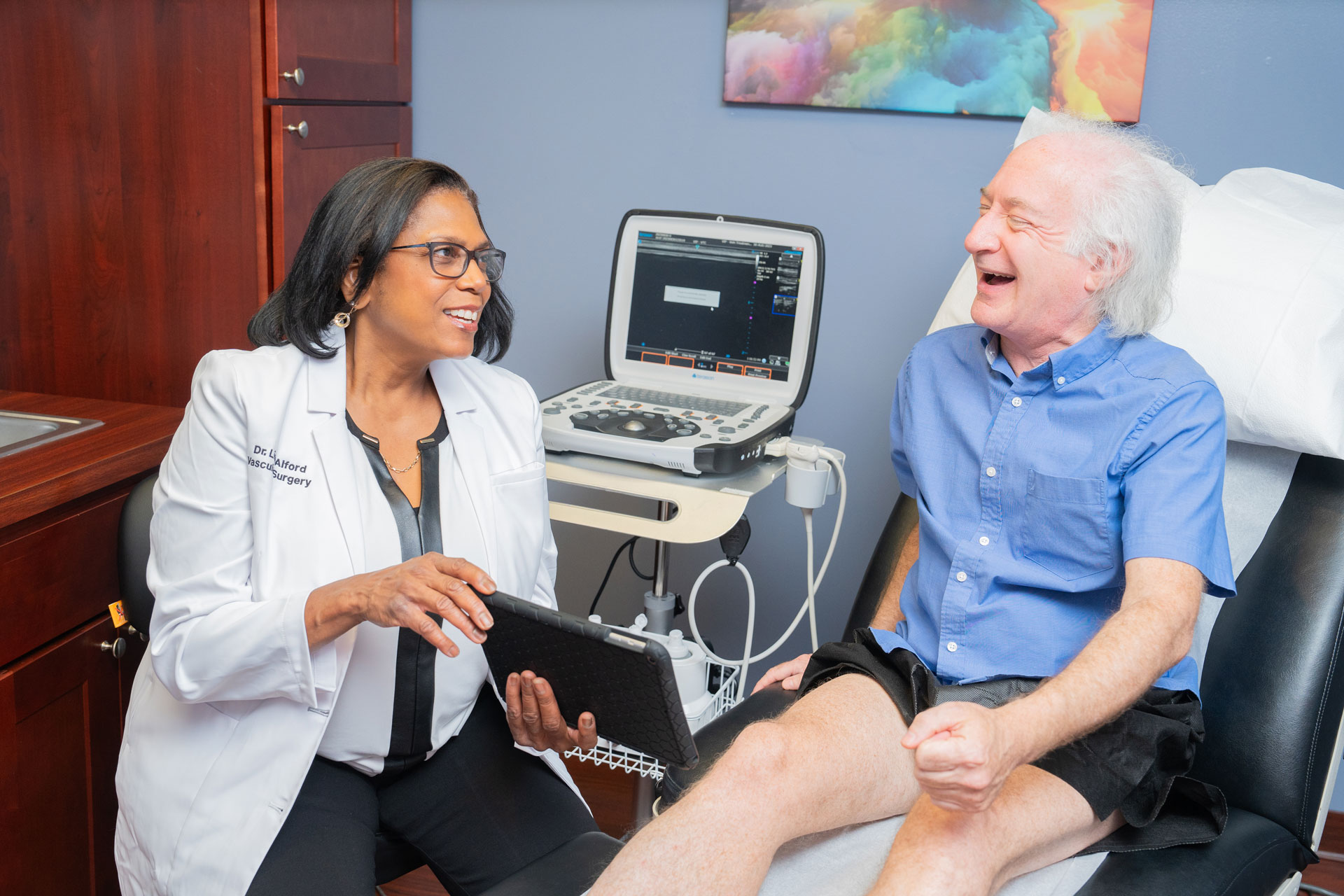
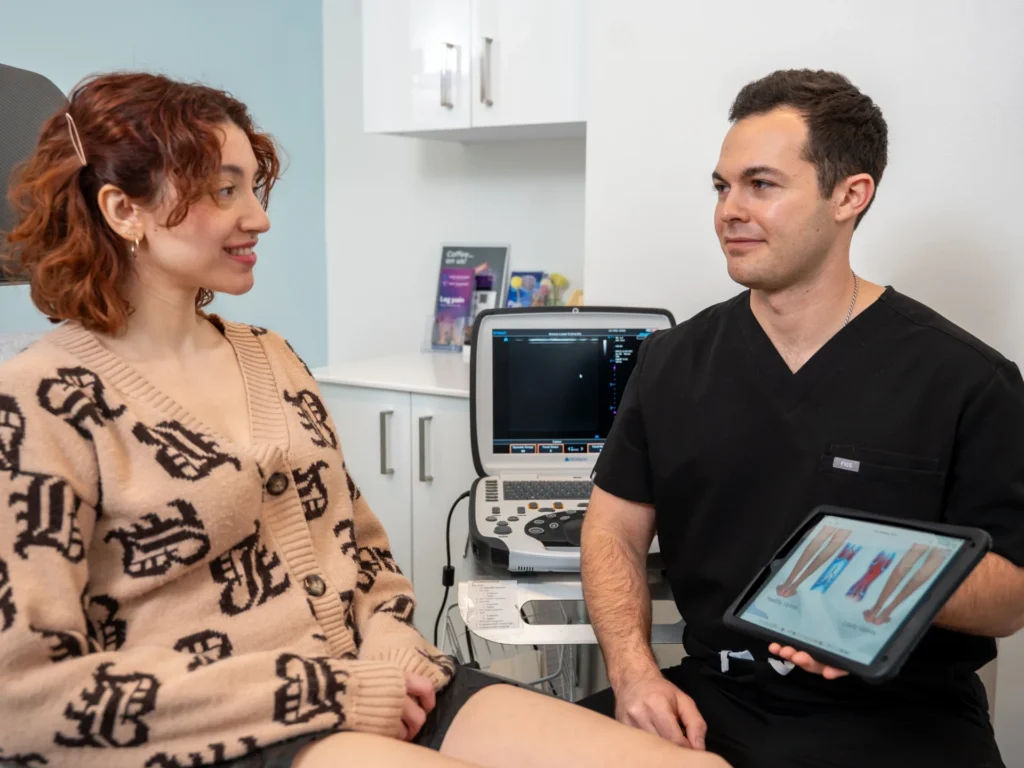
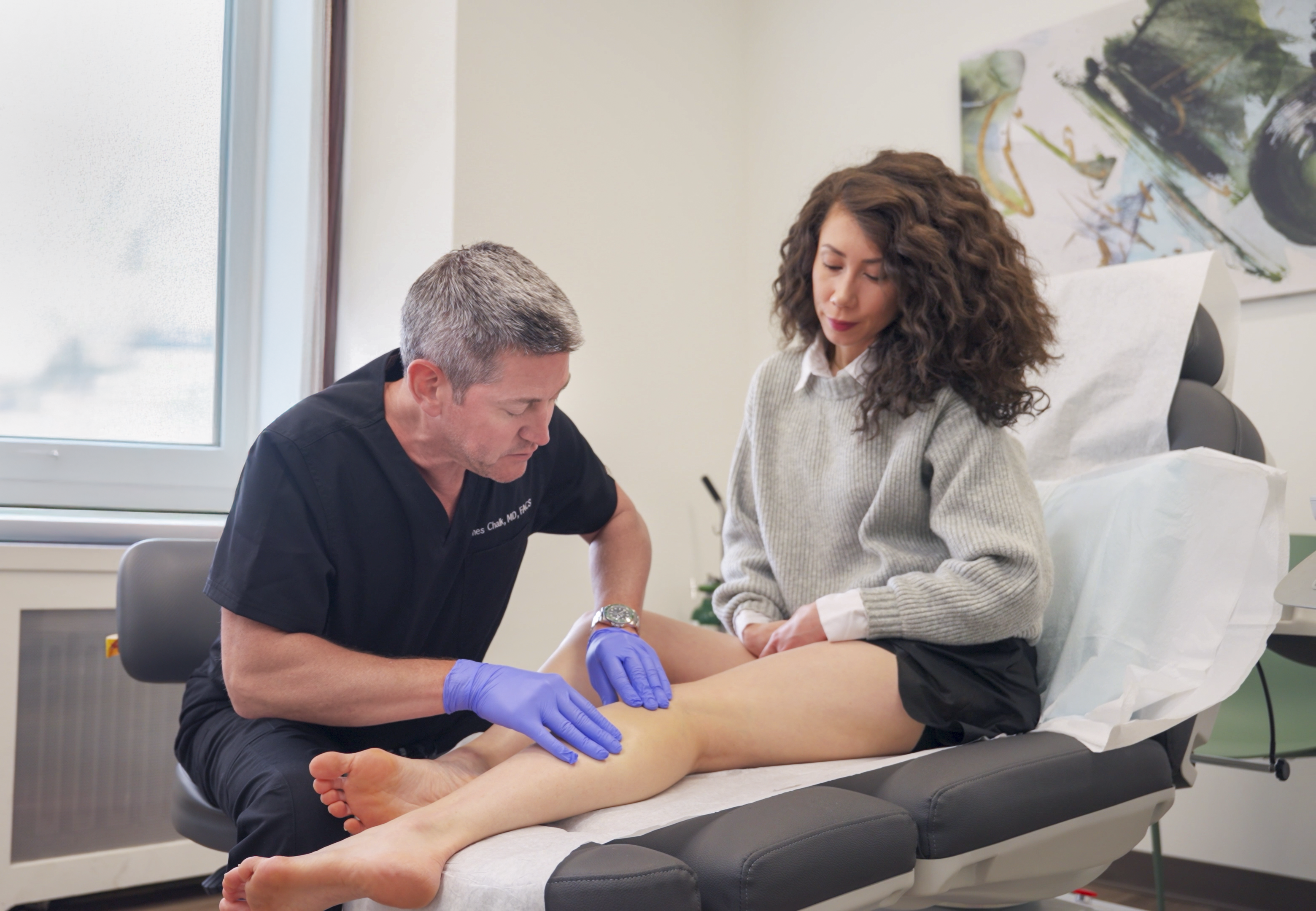
A duplex ultrasound examination can identify whether venous insufficiency is present and which veins are affected. This diagnostic step happens before any treatment plan is developed.
Radiofrequency ablation: treating the source
Radiofrequency ablation (RFA) has become one common treatments for underlying venous insufficiency. The procedure targets the saphenous veins, the large veins that run along the inner thigh and calf, when their valves have failed.
How does the procedure work?
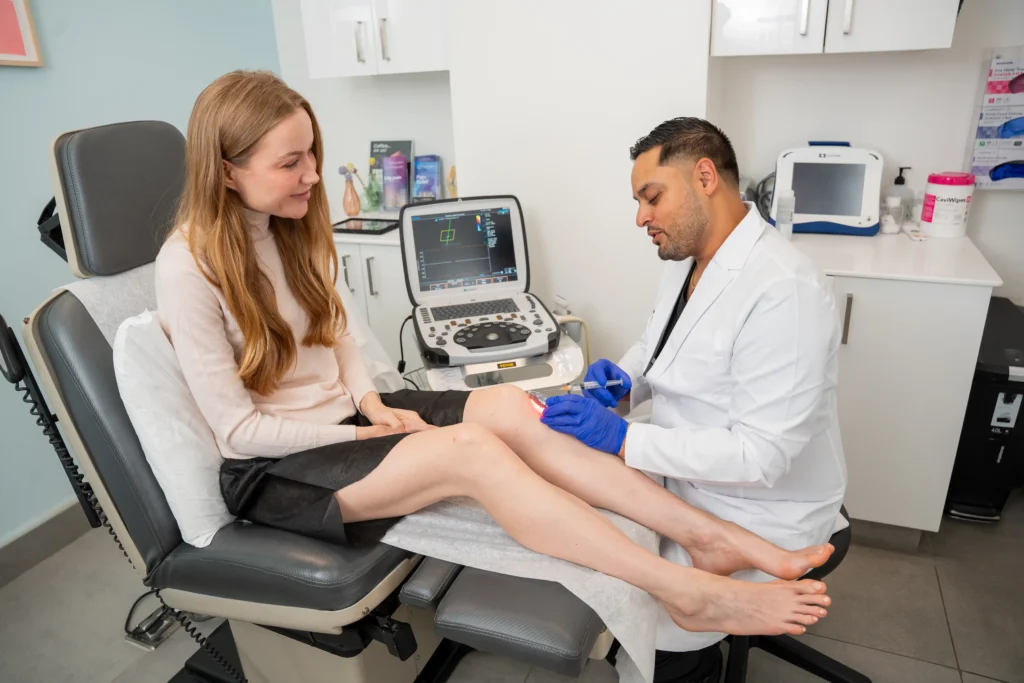
A thin catheter is inserted through a small puncture, typically near the knee. Using ultrasound guidance, the catheter is positioned inside the diseased vein. Once in place, the catheter delivers controlled radiofrequency energy that heats the vein wall, causing it to collapse and seal shut. Blood automatically reroutes through healthier veins.
An RFA procedure may take about 30 minutes or less.
Endovenous laser ablation: an alternative thermal approach
Endovenous laser ablation (EVLA) operates on the same principle as RFA but uses laser energy instead of radiofrequency energy. A thin laser fiber is inserted into the diseased vein and delivers thermal energy that seals the vein from the inside.
Both procedures have comparable success rates. The choice between them often depends on the specific anatomy of the veins being treated and the vein doctor assessment.
The treatment takes about the same amount of time as RFA, and recovery expectations are essentially the same.
Sclerotherapy: treating spider veins and small varicose veins
Sclerotherapy is a standard treatment for spider veins and small varicose veins. A sclerosant solution is injected directly into the vein through a very fine needle. The solution irritates the vein lining, causing it to seal and eventually fade as the body absorbs it.
Each sclerotherapy session takes about 30 minutes or less.
What to expect during and after vein treatment?
After RFA or sclerotherapy, the skin may show temporary changes as the treated vein closes and the body begins to process it naturally. Once the vein is no longer carrying blood, the body gradually begins to absorb it, which can cause mild, temporary changes on the skin’s surface.
- The treated vein is closing
Both RFA and sclerotherapy gently close the vein so it can be rerouted out of circulation. As this happens, the body begins a normal healing response, which may include a light warming sensation or mild tightness in the area.
- The blood inside the vein breaks down slowly
A small amount of blood remains inside the treated vein. As the body breaks it down, the skin above it may darken slightly or show soft color changes. This is similar to how a bruise changes color as it fades.
- The surrounding tissue responds naturally
It is normal for the tissue around the treated vein to react with some inflammation. This may cause mild tenderness or subtle color shifts on the skin. These reactions are expected and part of the healing process.
- The body gradually absorbs the vein
Over the next several weeks, the body continues to absorb the treated vein. As this happens, the skin tone and appearance improve gradually and naturally.
Can different treatments be used together?
Yes. Depending on each patient’s needs, treatments may be combined to achieve the most complete. A vein treatment sequence might look like this:
- Ultrasound evaluation to assess for venous insufficiency
- Ablation of the saphenous vein if reflux is present
- Sclerotherapy sessions to address remaining spider veins
Not everyone needs all of these steps. The treatment plan is individualized based on ultrasound findingsand patient’s unique clinical needs.
Dr. Benjamin Kum at the Addison clinic will review each case to determine which treatments are appropriate and in what order.
Who is a candidate for treatment?
Vein treatment may be appropriate if you experience:
-
- Leg heaviness or fatigue that worsens throughout the day
- Swelling in the ankles or lower legs
- Aching, throbbing, or burning sensations
- Visible varicose veins that bulge or cause discomfort
- Spreading spider veins
- Skin changes near the ankles, including darkening or thickening
- Restless legs or nighttime cramps
Where is the Addison clinic located?
The Vein Treatment Clinic in Addison serves patients from throughout the North Dallas area, including Farmers Branch, Carrollton, Richardson, and Plano.
📍 17980 Dallas Parkway, Suite 300, Dallas, TX 75287
Near Bent Tree Country Club and Addison Circle Park. Accessible from the Dallas North Tollway. Free parking available.
Phone: 972-619-3735
Hours: Monday through Friday, 9:00 AM to 7:00 PM
Dr. Benjamin Kum, DO, leads the Addison location. Board certified in Family Medicine and Addiction Medicine, Dr. Kum has 13 years of clinical experience and previously held academic positions at UT Southwestern.
Get vein treatment in Addison, Texas
For Addison-area residents who have been wondering whether their leg symptoms might be treatable, an evaluation can provide answers.
Visit Vein Treatment Clinic in Addison, Texas
FAQs
How do I know which treatment I need?
A duplex ultrasound determines whether you have underlying venous insufficiency. A vein treatment will be recommended based on your unique needs.
Is vein treatment covered by insurance?
Treatments for venous insufficiency and symptomatic varicose veins are typically covered when medical necessity is documented. Spider vein treatment without underlying disease is usually considered cosmetic and not covered. The clinic verifies coverage before scheduling procedures.
How many sclerotherapy sessions will I need?
Some patients may require from two to four sessions to address spider veins, depending on the extent of the area being treated. However, the only way to provide an accurate recommendation is after a physical examination and an ultrasound evaluation.
Can treated veins come back?
Treated veins do not return. However, new veins can develop over time, especially if risk factors like prolonged standing, genetics, or weight remain.